“I’m sorry. I was just—”
“Please, sit.”
She sat beside me, and after a moment’s hesitation, I joined her.
“I’ve been trying to find you for two years. I called Mass General six times, but you’d rotated to different departments, different hospitals. I was beginning to think I’d never get the chance to thank you properly.”
“You already did, in front of 200 people.”
“That wasn’t for you,” she said gently. “That was for them, your family. I could see it in their faces. They had no idea who you were, what you’d become. And I thought, ‘Someone needs to tell them. Someone needs to make them see.’”
My throat tightened.
“You didn’t have to do that.”
“Yes, I did.” Her voice was firm. “My husband came home from that hospital. He came home because you refused to give up. Do you know what the other surgeons told me that night? They said it was hopeless. They said even if he survived the surgery, he’d have severe brain damage. They were ready to let him go.”
I remembered that night, November 2021, around 11:00 p.m. The ER was chaos. A multi-car pileup on I-93 had flooded us with trauma cases. Mr. Whitmore had been brought in seizing, his brain hemorrhaging. The attending surgeon was stuck 40 miles away in traffic. The snowstorm had turned the highways into parking lots.
“Someone had to operate,” I said quietly. “Every minute we waited, more brain tissue died.”
“You were a second-year resident. You could have waited for someone more senior. You could have played it safe. Playing it safe would have meant letting him die.”
Judge Whitmore’s eyes filled with tears.
“He’s teaching again, philosophy at Boston College. His students love him. Last week he gave a lecture on Kant and the categorical, talking my ear off about his students’ insights.” She smiled. “I got my husband back. My children got their father back because of you.”
I didn’t know what to say. In medicine, we celebrate the saves, but we rarely see the after. We rarely know how the story ends. Patients leave the hospital and return to their lives, and we move on to the next emergency, the next impossible case.
“I’m glad he’s doing well,” I managed.
“He wants to meet you, properly, not in a hospital, not during rounds. He wants to thank you himself.”
She pulled out a business card.
“This is our personal number. Call anytime. We’d love to have you for dinner.”
I took the card, feeling its weight in my palm.
“I’d like that.”
We sat in comfortable silence for a moment. Then Judge Whitmore spoke again, her voice softer.
“I saw your face during the ceremony, when I called your name. You looked shocked, like you couldn’t believe someone remembered you.”
I didn’t respond.
“Being unseen doesn’t mean being unimportant,” she continued. “Some people are too small-minded to see beyond their own narrow definitions of success. That’s their loss, not yours. My clerk told me you said that.”
“I meant it.”
She stood, smoothing her skirt.
“You know what I see when I look at you? Not someone who quit, someone who had the courage to choose herself. That’s rarer than you think, Dr. Marchand. Most people spend their whole lives waiting for permission to be who they are.”
She squeezed my shoulder once, then walked away, her heels clicking against the marble floor.
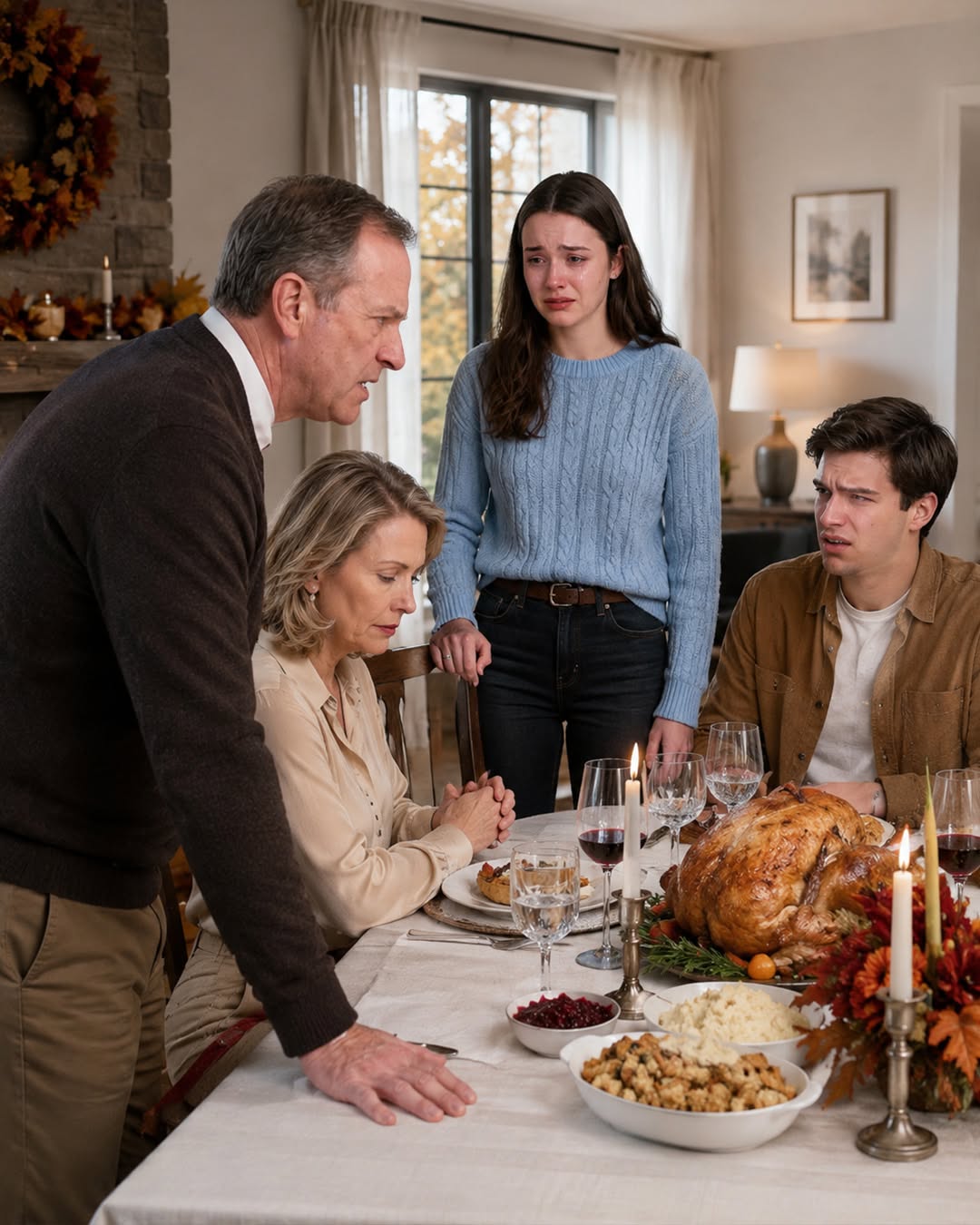
I sat alone for a few more minutes, turning her business card over in my fingers. Then I heard voices approaching, my parents and Connor leaving the reception early. I should have left. Should have slipped out the side entrance and avoided another confrontation.
But something rooted me to that bench. I was tired of running, tired of being the one who left.
They saw me at the same moment I saw them. My father’s face hardened. My mother looked like she’d been crying. Connor looked uncomfortable, caught between loyalty to his parents and something that might have been shame.
“Chloe.”
My father’s voice echoed in the empty hallway.
“We’re not done talking.”
“Yes, we are.”
“Don’t be dramatic.” He walked closer. “I’m trying to make things right here.”
“Make things right?” I stood up slowly. “You ignored me for 8 years. You erased me from family photos. You returned my wedding gift with a note calling me a quitter. And now, because a judge publicly praised me, you suddenly want to make things right?”
“We didn’t know,” my mother started.
“You didn’t ask.” I cut her off, but my voice wasn’t angry. It was just tired. “For 8 years, you could have picked up the phone. You could have sent one email, one text. Hey, how are you doing? That’s all it would have taken.”
“You blocked our numbers,” my father said.
“After you called me an embarrassment, after you told me I was throwing away the family legacy. I blocked you because every conversation was an attack. Every interaction reminded me that I wasn’t good enough for you.”
Connor finally spoke.
“Chloe, we were worried about you. We thought—”
“You thought what? That I was homeless? That I was struggling? You had my grandmother’s number. You could have asked her how I was doing, but you didn’t because you didn’t actually care. You just cared about how it looked that I’d left Harvard Law.”
My mother’s voice broke.
“That’s not fair. We love you.”
“Love?” The word came out sharper than I intended. “You love an idea of me. The daughter who was supposed to follow Connor to Harvard Law. The daughter who was supposed to make you look good at cocktail parties. But you don’t love me. You don’t even know me.”
“That’s not true,” my mother whispered.
“What’s my favorite color?”
She blinked.
“What?”
“My favorite color. If you know me, tell me.”
She opened her mouth, closed it.
“Blue?”
“Green. Sage green, like the scrubs I wear in the OR.”
I turned to my father.
“What’s my research focus?”
He stared at me.
“I’m working on a study about minimally invasive techniques for treating brain aneurysms. I’ve published three papers in the last 2 years. I’m presenting at a conference in Chicago next month. But you wouldn’t know that because you never asked.”
Connor shifted uncomfortably.
“Chloe, we want to fix this.”
Wordt vervolgd op de volgende pagina 👇
Continue reading by clicking the button (Continue Reading »») below!