
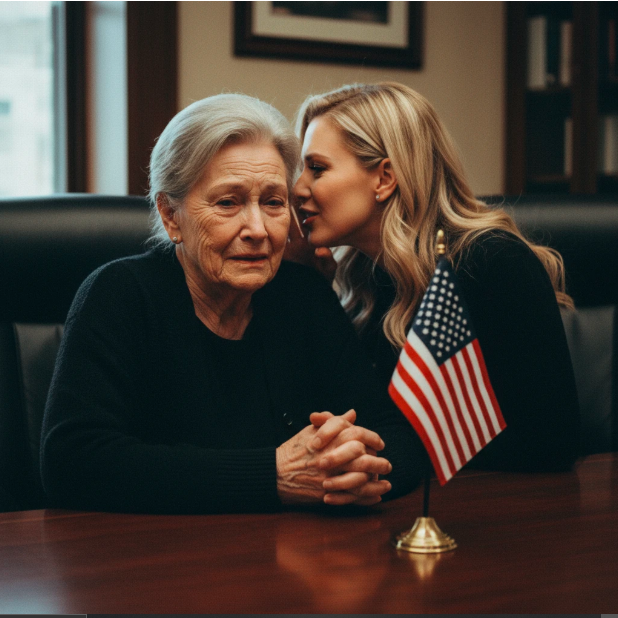
“Mom, please go see Mr. Harold Pierce.”
Below were the phone number and the law office address in downtown Dallas.
I traced the letters as if touching Nathan’s hand.
I sat still the entire morning, a finger resting on the numbers. I didn’t call yet. Partly because I needed to calm down. And partly because I knew this call would open a new chapter, and once it began, there’d be no going back.
I had to be ready—not a weeping, fragile mother, but a woman prepared to fight for the right to exist.
By late afternoon, my phone rang. An unknown number.
I answered, and a steady low male voice said:
“Hello, I’m Harold Pierce, the attorney handling Nathan Hartley’s legal matters. First, please accept my condolences for your loss.”
I gripped the phone, my throat tight. After a moment, I answered:
“Thank you, Mr. Pierce. Nathan… my son mentioned you. He trusted you.”
Harold’s voice softened, a steadying anchor.
“Yes. Nathan worked with me for some time. Before he passed, he left certain documents and instructed me to contact you. We should set up a meeting to clarify issues related to an addendum to the will. Could you come to my office next Tuesday at 2 p.m.?”
I nodded, knowing he couldn’t see me.
“Yes. I’ll be there. Thank you.”
When the call ended, I set the phone down and stared ahead. Fear fluttered in my chest, but so did hope.
Nathan hadn’t abandoned me. My son had prepared something—left me a path Brianna never expected.
I looked up at the smoke‑stained ceiling and it suddenly seemed brighter, as if Nathan’s eyes were watching over me.
That night, I opened an old spiral notebook and began to write like I was speaking to my son.
“Nathan, today I got a call from Attorney Pierce. You prepared more for me than I ever imagined. I promise I won’t let you down. I’ll keep my dignity, and I’ll let the world see you were right to believe in me.”
I folded the notebook and tucked it under my pillow.
Outside, cars tore down the highway like racing heartbeats. I knew the day of reckoning was close.
Two days later, my phone rang again. This time, Brianna’s name flashed on the screen.
I hesitated, then answered.
Her voice was sugary and strained.
“Genevieve, I just want to make sure you’re not planning to make trouble for me. We’re still family, right? I think you should let things be. Staying quiet is best for everyone. Otherwise, no one will believe you anyway.”
I drew a long breath, holding back anger.
“Brianna, I don’t want drama. I only want Nathan to rest in peace. But remember this—I won’t let anyone walk over me ever again.”
A short, mocking laugh crackled through the line.
“And what do you think you can do? No one’s on your side. People will just see a bitter old woman. You should disappear like you should have from the start.”
I closed my eyes and said nothing. I let her finish and quietly hung up.
Then I opened the drawer and looked at the recorder resting inside. I knew that if needed, I had what I needed to protect myself.
In the days that followed, I lived hour by hour.
Each morning, I put on my old coat and went out for a hot coffee from the convenience store near the motel. I sat in the corner, near the dusty window, and watched sunlight move across the room.
My shaking eased, replaced by steady anticipation. I knew that by next Tuesday, everything would be different.
In those quiet moments, I thought of Brianna. She was surely scheming, surely relieved, thinking she’d forced me to sign that agreement. She didn’t know the signature was invalid. She didn’t know her cruel words were recorded. And most of all, she had no idea what Nathan had left for me.
I looked at the silver key in my hand and squeezed it gently.
A new game had begun, and this time, I wouldn’t be the passive one.
The meeting with attorney Harold Pierce came faster than I expected. All that morning, my heart thudded like a drum.
I wore a neat old navy dress and a gray cardigan. I wanted to look put together—not to show off, but to make sure Brianna saw I was still Genevieve Hartley, a woman with dignity, not the “parasite” she’d called me.
The law office was in a three‑story red‑brick building downtown, with an American flag fluttering in front and a row of parking spaces filled with sedans and pickup trucks.
When I arrived, the clock on the dashboard read 1:45 p.m.
I sat in my car a few minutes, breathing deeply to steady myself. Through the windshield, I saw a silver BMW pull in. It was easy to recognize the woman who stepped out.
Brianna, in a fitted black dress, blonde hair neatly curled, heels too high for comfort but perfect for appearance. Next to her was Trent, her brother, in a crisp suit.
I got out. Brianna’s eyes met mine and briefly flickered, then hardened. She turned away without a hello. Trent leaned in to whisper to her, and they went inside quickly.
I followed with my head high and my hands tight on my purse strap.
The receptionist, a young woman with a Texas twang, smiled and led us to a carpeted waiting room. It was still and quiet except for the ticking clock on the wall.
Brianna sat across from me, legs crossed, fists tight on her designer bag. Every time she glanced up, her eyes slashed at me like knives. I stayed calm and even gave a faint smile, which only irritated her more.
At exactly 2:00 p.m., the door opened and Harold Pierce walked in.
He was in his sixties, silver‑haired, tall and lean, with kind eyes behind silver frames. He wore a navy suit that had seen many courtrooms, and carried a leather folder under his arm.
He greeted each of us, his voice low and steady.
“Thank you all for coming. I know this is a difficult time, but Nathan left very specific wishes. I’ll read the will exactly as written.”
We entered his office, a wide room with a polished mahogany desk and shelves full of files and heavy law books. A framed photo of the Dallas skyline at dusk hung behind him.
I sat across from Brianna and Trent, so tense I could barely breathe.
Harold began reading.
The first part was what I expected. The house, the car, retirement accounts, and the life insurance—everything left to Brianna.
She nodded repeatedly, lips curving into a smug smile. Each time Harold said “assets left to the wife,” she shot me a look full of challenge, as if to say: See? You’re nothing.
I sat with my hands folded, silent. I wasn’t reacting. I knew the surprise hadn’t come yet.
Then Harold paused. His tone shifted, slower.
“However, three months before he passed, Nathan added an addendum to the will. I’ll read it word for word.”
The air changed.
Brianna stopped nodding and leaned forward, eyes locked on the papers. Trent lowered his pen and stared.
My breath grew heavy.
Harold continued:
“I, Nathan Hartley, leave the entire contents of safe deposit box K412 at First National Bank, along with all related documents and accounts inside, to my mother, Genevieve Hartley, in full and exclusive ownership.”
A dead quiet moment followed. I could hear my own heartbeat.
Brianna slammed her hand on the table.
“What? No way. Nathan never mentioned any safe deposit box.”
Mr. Harold calmly looked up.
“Ma’am, I personally witnessed him sign this addendum. He was fully competent. I have medical verification attached. Nothing improper happened here.”
Trent cut in, his voice tight.
“We demand verification. This could be forged.”
The attorney didn’t flinch.
“You’re entitled to request it. But remember, this document is lawful and already filed with the county court. If you want to contest it, the process will be lengthy, public, and the outcome uncertain. I advise respecting the decedent’s wishes.”
Brianna’s face flushed. She bit her lip. I saw her hand tremble, though she tried to stay composed.
She turned to me, eyes blazing.
“You knew about this, didn’t you? You put Nathan up to it.”
I shook my head, speaking slowly.
“No. I’m as surprised as you are. Nathan never told me about a safe deposit box. But maybe my son knew better than anyone that his mother needed protection.”
Brianna let out a short, brittle laugh.
Trent placed a hand on her shoulder, whispered something, and both fell silent.
“Mrs. Hartley,” Harold said gently, taking out a sealed envelope and handing it to me, “these are the box key and the authorization. The bank will proceed once they have the death certificate. You have full access to the contents.”
I took it, my hand heavy yet oddly warm. Inside, I told Nathan:
Son, I understand now. You never abandoned me.
Brianna’s eyes locked on the envelope like she might snatch it. I saw fear there, not just anger. Maybe she knew the box held more than money. Maybe instinct made her panic, because she understood Nathan had seen her true nature.
The meeting ended as tight as a drawn wire.
Brianna shot to her feet, her chair scraping back with a bang. She yanked Trent’s arm and stormed out. But before leaving, she turned, stared me down, and said each word:
“Don’t think you’ve won. I won’t let this go.”
The door slammed.
Only Harold and I remained.
He looked at me with a faint, kind smile.
“Mrs. Genevieve, your son was very thorough. He planned for every scenario. Trust that he wanted you protected.”
I nodded, my throat tight. Tears welled up. But this time, they weren’t from despair. They were the tears of new strength and faith.
Leaving the office, I stepped into the street. The late afternoon was chilly, wind tugging my cardigan. I held the envelope close and walked slowly. People rushed by with briefcases and coffee cups, traffic flowed, the city roared on.
Yet I felt oddly comforted.
In all this loss, I still had something precious: my son’s quiet protection.
And now it was the flame guiding me through whatever came next with Brianna.
I knew this was only the beginning. A small bomb had gone off, and the aftershocks would last. Brianna wouldn’t sit still, but I wasn’t the compliant mother anymore. I had evidence, a silver key, and most importantly, a reason to fight.
Nathan, my son, had given me that faith, and I swore I wouldn’t waste it.
Three days after the will reading, I was at First National Bank on a cold morning. The sky was slate gray, the April wind damp and gusty, whipping my hair as I crossed the downtown sidewalk.
I wore a dark brown heavy coat, the envelope and silver key from Mr. Harold in hand. My heart pounded, not from fear, but because I knew the truth Nathan had prepared for me lay beyond that steel door.
The bank lobby was busy, heels tapping on the polished marble floor, soft country music playing over hidden speakers. I went to the desk and showed my documents.
The banker, a middle‑aged woman named Peterson, looked up with kind sympathy.
“Are you Mrs. Genevieve Hartley? We were expecting you. Please, follow me.”
I nodded and followed her through several security doors.
We stopped at a thick gray vault door with an electronic lock. Ms. Peterson scanned her card and used a master key. My hands shook as I pulled the silver key from my pocket and turned the second lock.
A click.
The door swung open, and we stepped into a large, cold room under fluorescent light. Metal boxes lined the walls in neat rows.
Box K412 sat on the third rack, long and heavy. I needed both hands to pull it.
When the cold metal box settled on the small table in the private room, I hesitated. Ms. Peterson offered a small, respectful smile.
“Take as much time as you need. I’ll wait outside.”
The door closed.
It was just me and the box.
I sat, took a deep breath, and turned the key.
Inside, the first thing I saw was a brown envelope labeled in Nathan’s familiar messy handwriting: For Mom.
I opened it with shaking hands.
Nathan’s voice seemed to speak as I read:
“Mom, if you’re holding this, the thing I feared has happened. I’m sorry I can’t protect you by being there, but I’ve prepared so you’ll never be abandoned. You deserve a peaceful life. No one has the right to throw you out on the street.”
I cried. Tears fell onto the letter, blurring the lines. I quickly wiped them away. I couldn’t lose a single word he left me.
Beneath the letter was a thick stack of documents organized neatly in clear folders.
I opened them.
Bank statements. Investment agreements. Stock sheets.
It took a few seconds to understand the numbers.
Nearly $200,000, all in my name.
Nathan had taken the $40,000 I gave years ago, invested it over time—slowly, carefully, using tips from co‑workers and financial advisors—and turned it into this.
And there was more.
In the corner sat a separate file marked in red: Documentation.
I opened it and almost lost my breath.
Inside were printed emails, text messages, even screenshots.
The first line hit like a slap.
“She just needs to hurry up and die and leave the pension. I’ll find a legal way to get it.”
That text came from Brianna’s number to Trent more than a year ago.
I shook, but kept reading.
There were sections where Brianna discussed manipulating Nathan, making him believe I was a burden, pushing me to pay more, even though the mortgage came straight from his salary.
There were luxury purchase receipts matching the days she claimed she couldn’t afford groceries. Spa days in Scottsdale, a weekend in New York, designer clothes picked up in high‑end Dallas malls.
Each page twisted my stomach—pain and a rising anger.
Nathan had known. He’d seen it all and quietly gathered proof so one day I could protect myself.
At the bottom was an old family photo. Me and Nathan on his college graduation day, his face bright with pride, me clutching his arm in my Sunday best.
On the back he’d written:
“Mom, you’re the reason I got here. Never forget that.”
I pressed the photo to my chest, choked up. For years, I’d thought my son had been pulled away by his wife’s control. But deep down, Nathan had always stood with me. He’d just been preparing for the worst.
When I left the bank, the envelope and files were secure in my purse.
Ms. Peterson walked me out, her eyes gentle.
“Mrs. Hartley, I met Nathan a few times when he came in. He always mentioned you. I believe he loved you more than you know.”
I nodded, eyes wet, and whispered my thanks.
Outside, the midday light made me squint. The wind was cold, but I felt warm inside.
On the drive back to the motel, my phone rang.
Brianna.
For a second, I wanted to ignore it, but I answered.
Her voice was sickly sweet.
“Genevieve, are you busy today? I think maybe we should sit down and talk about everything. I don’t want the family to fall apart. I made roast chicken—your favorite.”
I tightened my grip on the wheel and gave a thin smile she couldn’t see.
“Sure. I’ll come.”
I knew she wasn’t inviting me out of kindness. She’d heard about the box. News traveled fast in families. Now, she wanted to pry out whatever Nathan left.
But this time, I wasn’t coming empty‑handed.
I had truth. Evidence. Money.
I had my son’s quiet protection.
That meeting would be our first face‑off since the will reading. And this time, I wouldn’t just defend. I’d test her, so she’d see I was no longer the compliant mother‑in‑law.
I drove slowly, sunlight flashing off the windshield as I merged back into the suburbs, my lips pressed tight.
Inside, I spoke to Nathan.
“Thank you, son. I found my weapon, and I’ll use it at the right moment so you can rest and the truth can see daylight.”
The lunch date with Brianna fell on a clear noon. Sunlight sliced through my windshield so bright I had to pull the visor down.
I drove my old sedan past manicured lawns and mailboxes decorated for spring, emotions roiling.
From the moment I left the bank, I knew her invitation wasn’t about family. It was just another trap. But this time, I was ready.
Brianna’s house sat on a quiet cul‑de‑sac, identical ranch‑style homes lined up neatly, flags fluttering on porches.
It was still the place I’d lived for two years, but now it felt unsettlingly foreign.
When I parked, the door opened.
Brianna stood there in a pristine white dress, smiling warmly as if nothing had ever happened.
“Genevieve, you’re here. I’m really glad,” she chirped, honey‑sweet voice, eyes cold as ice.
Continue reading by clicking the button (Continue Reading »») below!