
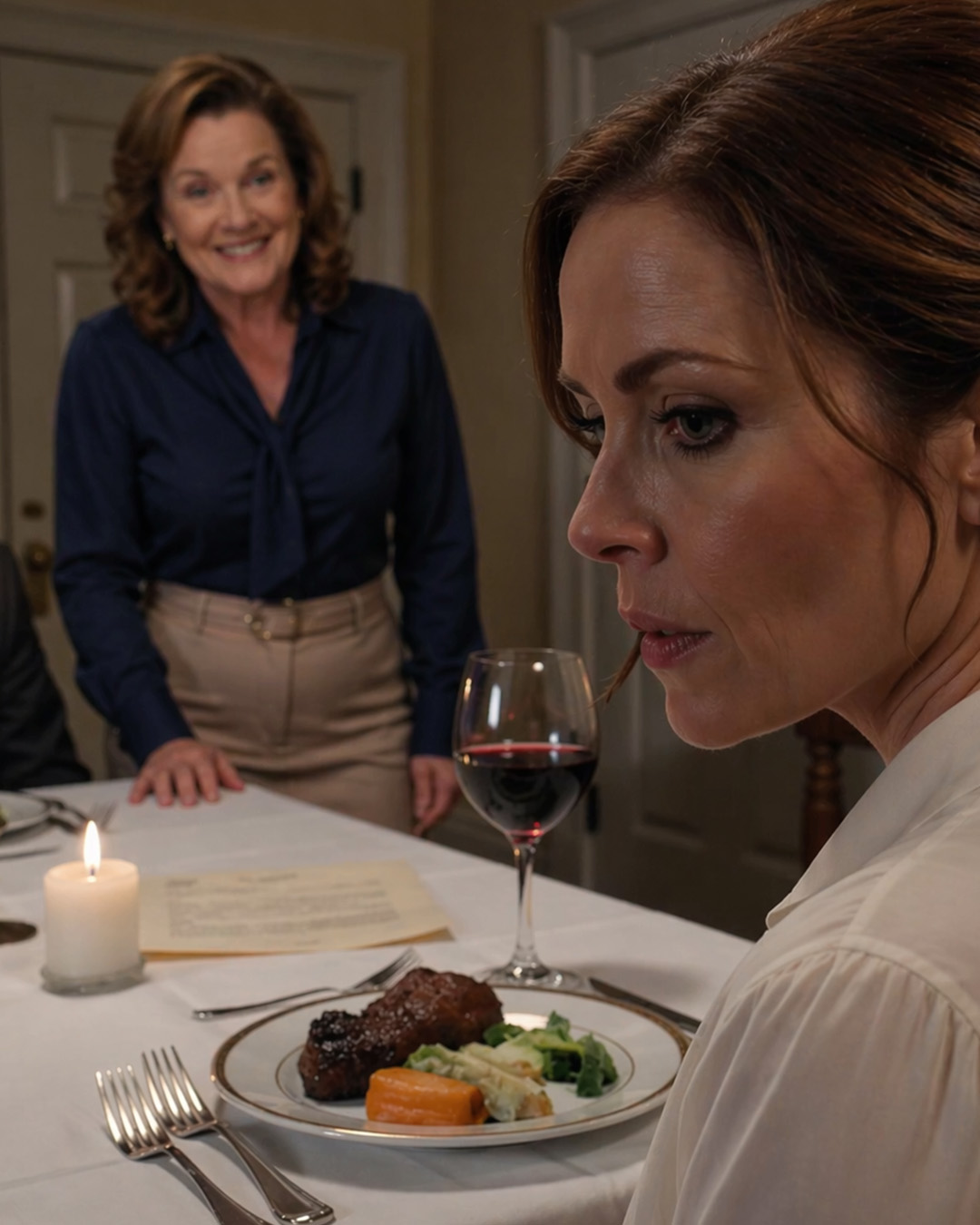
In the half second between setting the folder down and watching my mother reach for it, a memory surfaced, clear and whole, like a photograph lifted out of water.
Summer. I was 15, sitting on the porch with Grandpa Earl, both of us drinking sweet tea from mason jars. The cicadas were screaming in the pines, and the air was thick enough to chew. He’d just finished restaining the porch railing, and his hands were still dark with the color.
He said it out of nowhere.
“Birdie, this house will always be yours. No matter what your mama says. Promise me you’ll remember that.”
I laughed. Fifteen years old, barefoot, no idea why he’d say something like that.
“Why would Mama say anything, Grandpa?”
He didn’t answer. He just looked out at the yard, past the dogwood tree he’d planted the year I was born, and took a slow sip of his tea.
Now I understood.
He’d known. He’d watched his own daughter for decades, and he’d seen what I couldn’t, what I was too young and too close to see.
He knew she’d try to take it. He knew she’d lie.
And because he knew words alone wouldn’t survive her, he went to a lawyer, sat in an office, and put everything in writing.
He couldn’t protect me from her forever. But he could build something she couldn’t talk her way around.
I looked at the folder on the table. My grandfather’s signature was inside it. His handwriting, steady, deliberate, the same as I remembered. Twenty years old, still holding the line.
My mother picked up the first page. I watched her eyes move across the words. I watched the color drain from her face like water going down a sink, and I waited.
But I hadn’t handed her the trust document yet.
The first page was the deed, the printout from the Register of Deeds, the same one I’d pulled up at my desk three days ago.
She glanced at it, frowned, and set it down.
“What is this?” she said. “Some kind of work paper?”
I didn’t answer directly. Instead, I asked a question. Calm, clear, loud enough for everyone at the table.
“Mom, just so I understand, you’re saying this house is yours outright. Free and clear.”
“Of course it is.”
Her chin lifted.
“Your grandfather left it to me. I’ve kept it up for 20 years.”
“And there was no will, no trust, no legal arrangement of any kind?”
Her eyes flickered. Just for a beat, quick as a blink, but I caught it. That micro-hesitation before the lie.
“Nothing,” she said. “I told you that when you were 17. Nothing’s changed.”
“And you’re signing this quitclaim deed to add Ray’s name because you, as the owner, have the right to do that.”
“How many times do I have to say it?”
She smacked the table lightly.
“Yes.”
Around us, the family shifted. Aunt Vivien set her fork down. Brin stopped chewing. Uncle Dale looked up from his plate for the first time all evening. Ray sat straighter, his jaw working like he was chewing something that wasn’t food.
My mother had just declared, in front of every person in this room, that she was the owner, that there was no will, no trust, no legal document that said otherwise.
I needed her to say it, all of it, in front of everyone.
Now she had.
I turned the folder around so it faced her and opened it to the second page.
The second page was the trust instrument.
I slid it across the tablecloth the way she’d slid the quitclaim deed toward me 10 minutes ago, gently, evenly, like it was nothing at all.
“Before you sign anything else, Mom, I need you to read this.”
She looked down. The document was typed on cream-colored legal paper, dated March 14, 2005, seven months before my grandfather’s stroke.
The header read: Last Will and Testament of Earl T. Puit, Exhibit B, Testamentary Trust.
Her lips moved slightly as she read.
The table was silent. I could hear the candle flames bending in the draft from the kitchen window.
She reached the operative clause. I knew exactly which line because I’d read it 50 times in the last three days.
Gloria Holloway, trustee of the Earl Puit Testamentary Trust for the benefit of Ingred M. Holloway.
Her finger stopped moving. She stared at the page the way you’d stare at a crack spreading across a windshield, watching it grow, knowing you couldn’t stop it.
“What?”
She started, then stopped. Read it again. Slower this time.
Ray leaned over.
“Gloria, what’s it say?”
She didn’t answer.
Aunt Vivien rose slightly from her chair, craning her neck. Brin’s mouth was open. Uncle Dale had pushed his plate forward and was watching with the careful attention of a man who’d just realized the evening had turned.
My mother looked up from the paper. Her face had gone white except for two spots of color high on her cheeks, like someone had pressed hot coins against her skin.
“Where did you get this?” she whispered.
There were still three pages left in the folder, but the room had already changed.
“The Register of Deeds,” I said. “It’s public record. Anyone can look it up.”
I turned to the third page.
“And from Harold Puit, the lawyer Grandpa hired to write his will.”
I paused.
“The will you told me didn’t exist.”
Gloria’s hand went flat on the table, pressing down like she was trying to hold the surface still.
“Gloria,” Ray said again, louder now. “What does it say?”
Aunt Vivien had moved to the edge of her seat.
“What’s happening, Gloria?”
My mother ignored them both. She flipped back to the first page and read it again, her eyes scanning fast, searching for something. An error, a loophole, a reason to say this wasn’t real.
She didn’t find one.
She looked up at me. Her jaw was tight. Her voice came out low, vibrating like a wire stretched too far.
“You went behind my back. You went to that old man and you—”
“I didn’t go behind your back, Mom. I went to the county courthouse. Anyone can do that.”
“This is— You can’t—”
She picked up the affidavit and held it like she wanted to tear it.
“This is 20 years old. It doesn’t mean anything.”
“It’s a legal trust,” I said. “Executed and recorded in 2005, probated by the Wake County Clerk and still in force.”
“You can’t do this.”
Her voice cracked, not with sadness, with fury.
Ray pushed his chair back an inch. Brin grabbed her water glass and held it. Uncle Dale looked at Aunt Vivien. Aunt Vivien looked at me.
I didn’t raise my voice. I didn’t need to.
“I didn’t do anything, Mom. Grandpa did, 20 years ago.”
I stood and addressed the table. Not to lecture, to explain. These people deserved to know what they’d walked into.
“Grandpa Earl left this house to me in a trust,” I said. “Mom was the trustee. She was supposed to transfer the title to me when I turned 21. She never did.”
Aunt Vivien’s hand went to her mouth.
“Gloria, is that true?”
My mother’s chin jutted forward.
“It’s not that simple.”
“It is that simple,” I said. “The trust is legally binding. The deed is on public record. I’ve confirmed it with the attorney who drafted it.”
I pointed to the quitclaim deed lying on the table.
“And that form you just signed? It’s worthless. You can’t transfer property you don’t own.”
The room went still. Not quiet. Still. The kind of stillness where even the air stopped circulating.
Ray spoke first. He’d gone rigid in his chair, his hands gripping the armrests.
“You told me this house was yours,” he said to Gloria. Not gently.
My mother wheeled on him.
“It is mine.”
“The deed says otherwise,” I said. “Your name is on it as trustee, not as owner. There’s a legal difference, and it matters.”
“Your grandfather had no right to—”
“He had every right. It was his house. He built it. He paid for it. And he chose to leave it to me.”
Brin whispered, “Oh my God,” barely loud enough to hear.
My mother gripped the edge of the table with both hands. Her knuckles were white. The candles kept burning. The roast kept cooling. Nobody touched their food.
She looked at me the way she’d looked at me my whole life, like I was a problem she’d already solved.
Except this time, she hadn’t.
When cornered, my mother didn’t retreat. She attacked.
“I raised you in this house.” Her voice filled the room. “I fed you. I kept the lights on. I stayed up with you when you were sick. I gave up everything. And this is how you repay me? With lawyers and paperwork?”
She turned to Vivien, arms open, palms up, the posture of a martyr.
“You see this, Viv? You see what my own daughter is doing to me in my house? At my table?”
Vivien didn’t respond. She was still reading the trust document, her glasses low on her nose.
My mother turned back to me.
“Your grandfather was a stubborn old man who didn’t understand the first thing about raising a family alone. I did everything. Everything. And he goes behind my back and signs some paper.”
“Mr. Puit called you,” I said.
I didn’t raise my voice. I didn’t need to match her volume to outweigh her argument.
“He called you after the trust was set up. He reminded you of your legal obligation, and you told him, ‘I know what I’m doing.’”
I turned to the next page, the affidavit.
“He put that in a sworn statement. He remembers every word.”
“That old man doesn’t know what he’s talking about.”
“He’s a licensed attorney who drafted Grandpa’s will,” I said. “And he’s willing to testify.”
My mother’s face contorted.
“I gave up my life for this family.”
The words bounced off the walls and died. Nobody picked them up.
I let the silence hold for three full seconds before I answered.
“You gave up my life, Mom,” I said. “Not yours. Mine.”
Brin’s hand went to her chest. Vivien closed her eyes. And my mother, for the first time I could remember, had nothing left to say.
The silence lasted long enough for the candles to flicker twice.
Then Ray broke it.
“Hold on.” He raised his hand like he was stopping traffic. “I need to understand something. I put $15,000 into this house. New roof, new deck, paint, plumbing. If this is some kind of trust situation, who’s going to pay me back?”
Every head at the table turned to him.
Aunt Vivien spoke first, her voice flat.
“Seriously, Ray, that’s your concern right now?”
“I was told this house was Gloria’s,” he said, leaning forward. “I invested based on that.”
He pointed at my mother.
“You told me this was yours, Gloria. Free and clear. Those were your words.”
My mother opened her mouth, but nothing came out. She looked at Ray the way a person looks at a door that just closed in their face.
“Any renovations made to the property without the beneficiary’s authorization are between you and Gloria,” I said. “Not between you and me.”
Ray stared at me for a long moment. Then he pushed his chair back, dropped his napkin on his plate, and stood up.
“I didn’t sign up for this,” he said.
He walked through the kitchen, out the back door, and onto the deck he’d built with his own money. We heard his truck start 30 seconds later. Gravel crunched under the tires. The sound faded down Riddle Creek Road.
My mother watched the back door for a long time after he left, her hands still flat on the table, her face emptied out.
When she turned back to the room, I saw something I’d never seen in her before.
She was afraid.
Not of me. Not of the paperwork.
Of being alone.
Aunt Vivien had been reading quietly, methodically, turning pages the way I would, one at a time, absorbing every line. When she finally set the folder down, her hands were trembling.
“Gloria.”
Her voice was careful, controlled, but underneath it ran a current that made my cousin Brin sit up straight.
“Daddy left the house to Ingred, and you knew.”
“Vivien, stay out of this.”
“No.”
Continue reading by clicking the button (Continue Reading »») below!