
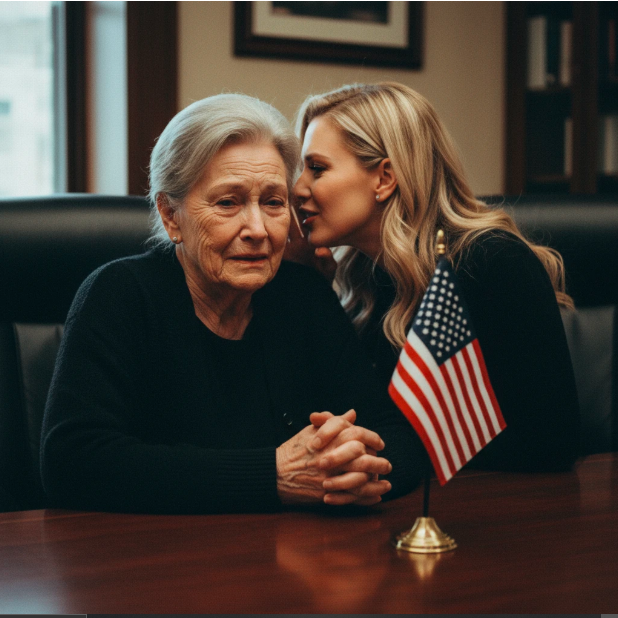
“I don’t need to prove much. I just want everyone to know Nathan was never blind. He saw the truth, and he protected his mother in his own way. Today, I let Brianna’s own voice expose her.”
The whole room went silent. People no longer looked at Brianna the same way. The praise was gone, replaced by cold, scrutinizing stares.
Brianna tried to stand tall, but I clearly saw her shoulders shaking, her face drained of color. She was lost inside her own performance before an audience that no longer believed.
I went back to my seat and set my hand on the purse, heavy with documents. I knew I still had stronger blows to land.
But right now, one strike was enough to make Brianna’s perfect mask fall off in front of the whole family.
That night, as I left the house, I heard the whispers behind me.
“Unbelievable. Someone like that had the nerve to fake crying.”
“Now I understand why Nathan changed the will.”
I walked into the night wind, feeling lighter. For the first time in months, the pain of losing my son wasn’t smothered by humiliation.
Instead, I felt a quiet strength—the strength Nathan left me—so I could keep going and let the truth finally be seen.
After that evening, the whole family atmosphere changed.
Relatives and friends all looked at Brianna with caution and doubt. I knew her mask had fallen, but someone used to living by deceit wouldn’t quit easily.
And sure enough, two days later, on a drizzly evening, Brianna showed up at the door of the motel where I was staying.
She wore a long coat, hair wet and clinging to her cheeks, still trying to look polished.
When I opened the door, she stepped in immediately and sat down like she owned the place. Her eyes were tired, but her voice was honey sweet.
“Genevieve, we need to talk. I don’t want a war anymore. I know you have evidence. I won’t deny it. But we all want peace. I’m proposing a deal.”
I looked at her without answering, sat on the bed, and waited to see how the show would go on.
Brianna leaned toward me and lowered her voice.
“Let’s split what’s in the box. Half and half. I don’t need all of it. You keep your share, I keep mine. In return, you stay quiet. No more evidence. No making a scene with the family. Everything goes back to normal. That’s the only way we both win.”
Hearing that, I wanted to laugh.
Normal? After everything she’d done?
But I didn’t show it. I just nodded slightly, my voice trembling on purpose.
“Maybe you’re right. I’m exhausted. But how do I know you’ll keep your word?”
Right then, I took a neat stack of papers from the drawer.
On top, it said: Investment Cooperation Agreement.
I placed it on the small motel table and slid it toward Brianna.
“I don’t need much,” I said softly. “We just sign this. Harold drafted it so both sides commit. That way, no one can claim they were forced later.”
Brianna frowned and glanced over the papers. I knew she was suspicious, but greed won.
Her eyes skimmed lines and relaxed when she saw vague phrases:
“Investment. Cooperation. Commitment to shared responsibility. No claims.”
She looked up with a bitter little smile.
“You’re not that naive after all. Fine, I’ll sign. I want this over.”
Her hand shook holding the pen, but she signed in the end—a straight, bold signature.
And the moment the ink dried, I knew the game was over.
Because in that “cooperation agreement,” every line was a trap. Harold had carefully woven in legal clauses.
Brianna admitted spending $15,000 from the life insurance on personal use, acknowledged her insults and humiliation toward me, and agreed to withdraw any claims against Nathan’s assets.
In other words, it was a disguised confession, and Brianna had just signed it herself.
I stayed quiet for a few seconds, watching her fold the papers like she had just bought a ticket to safety.
Then I said softly:
“You know, Nathan always thought ahead. He planned for everything. And maybe today, you proved he wasn’t wrong.”
Brianna froze, eyes wide, as she realized she’d been cornered completely.
But there was nothing she could do. It was all on paper, in her own handwriting.
She jumped up, face white, voice cracking.
“You… you tricked me.”
I answered calmly:
“No, Brianna. Your greed and contempt tricked you. I only handed you a pen. The rest, you chose.”
Rain tapped the motel window.
Brianna stood there a moment, then suddenly turned and left. The door slammed, leaving an oddly peaceful quiet behind.
I stayed seated, running my hand over the freshly signed papers. Tears fell, but not from helplessness.
They were the tears of a mother who had suffered loss and humiliation and finally found her dignity again.
That night, I opened the window and let the night air in. I looked up at the murky Texas sky and whispered:
“Nathan, you did it. You’re still protecting me even when you’re not here. And I promise, from now on, I’ll live without bowing my head.”
I knew it wasn’t entirely over with Brianna, but with her written confession and the evidence I held, she couldn’t touch me anymore.
The game was finished.
And for the first time, I was the one who had won the match.
After the night Brianna put her name on that fateful paper, I knew something in me had finally closed.
But with someone who lives by schemes, I could never be careless. I needed a new start. A place where each morning I woke up wasn’t haunted by my former daughter‑in‑law’s cold stare.
I started looking for a home.
Nothing fancy, nothing flashy. Just a small apartment with enough light and quiet so my footsteps wouldn’t be treated like noise.
In the end, I found it—a third‑floor unit in a modest building on the edge of town, with windows facing the community park. Wide glass panes brought sunlight into the living room, where I set an old moss‑green armchair I’d bought secondhand from a thrift store.
From there, every morning, I could watch other seniors walking their dogs, kids playing on the swings, teenagers tossing a football, and I could feel like I still belonged to a community.
On moving day, I stood in the empty apartment holding a small box of Nathan’s keepsakes.
I placed his graduation photo on the wooden shelf beside a little lavender plant I’d grabbed from the shop downstairs.
That alone warmed the room.
I whispered:
“Nathan, see? I have a new home. It’s not big, but it’s full of light. And this time, no one can take it from me.”
In the first week, I joined the seniors’ women’s group at the church near the park. They met regularly in the fellowship hall—sometimes to read books, sometimes just to chat and knit while a coffee urn burbled in the corner.
I listened to their stories, and one day I shared mine.
I didn’t reveal every detail, but enough for them to understand.
“Don’t keep your eyes shut when you’re humiliated,” I told them. “And don’t believe patience will change someone cruel.”
My story, though painful, was a warning to women like me.
Don’t let yourself be erased in the name of family.
Harold, the loyal attorney Nathan trusted, visited one afternoon. He brought the original paper Brianna signed.
Setting it on my small kitchen table, he looked at me and said:
“If she bothers you again, we have a weapon. This document is strong enough for any court to shut Brianna down. You don’t need to worry anymore.”
I smiled for the first time in a long while, feeling a weight lift off my shoulders.
For weeks, I’d been bracing for a nasty call or another threat.
But my phone stayed quiet.
No calls, no messages.
She vanished into the shadows where people who’ve lost their credibility hide behind silence.
Still, I stayed careful.
One morning, I sat at my small desk, opened my old laptop, and plugged in a new USB drive.
I transferred every copy of the evidence, recordings, screenshots of messages, and the credit card statements Harold had helped pull.
I sealed the USB in a thick envelope and mailed it to a backup law office—Harold’s close friend in Boston.
If anything happened to me, everything would be released automatically.
That was my justice insurance.
The final trap, so Brianna could never crawl back up.
That evening, I sat alone on my balcony, watching the streetlights cast gold over the trees. No more fake sobbing, no more whispered contempt, just a cool breeze, the smell of grass from the park, and kids’ bright laughter drifting up from below.
I took a long breath, closed my eyes, and let my heart rest after the storms.
Nathan was gone, but what he left me wasn’t just money or legal papers.
It was faith that justice—slow as it may be—can still show up.
And as long as we stand our ground and hold on to our dignity, no one can turn us into trash.
I poured a hot cup of tea and raised it like touching an invisible promise.
From now on, I’d live for myself. Not as someone else’s shadow. Not as a burden in anyone’s eyes.
I’d live as a free woman, with a small sunlit home and the belief that justice had been sown.
Some mornings, I wake in my little apartment and open the window to let the sun flood the room. On the table, Nathan’s framed photo sits straight, his gentle smile reminding me:
“Mom, you’re never alone.”
I pour coffee, listen to sparrows chirp outside, and realize that finally, I can breathe like a normal person again.
Justice doesn’t always come from courtrooms or loud verdicts. Sometimes it happens quietly, through evidence, signatures, and the persistence of a heart that refuses to break.
I didn’t need to publicly destroy Brianna.
I just needed her to fall into her own trap.
And she did.
Sometimes I wonder, if Nathan were still here, what would he think?
Maybe he’d hug me tight and say:
“Mom, you’re stronger than I thought.”
I know the pain of losing him will never fully fade. But within that pain, I found strength. I stood up. I refused to let anyone define my worth or turn me into a shadow with their insults.
Sometimes I stroll in the park and chat with a few ladies from the group. They listen wide‑eyed, then nod.
“You did what many of us wouldn’t dare,” one of them told me.
I don’t see myself as a hero. I’m a mother, a widow, an older woman who knows silence can be more dangerous than confrontation.
Every night before bed, I still check the backup USB, thinking of the neatly stored files. I don’t need to use them, but knowing they exist lets me sleep.
It’s not just justice insurance for me. It’s a reminder that truth is stronger than lies, if we hold it steady.
Writing down this story, I’m not seeking pity. I want to leave a message for anyone who’s felt belittled or trampled.
Don’t ever think age or loneliness makes you weak. Don’t be afraid to stand up. Sometimes a single piece of paper, a pen, or a tiny recorder is enough to turn your life around.
I lost my son, but I didn’t lose myself.
That’s why I can sit here and tell you this with calm conviction.
Justice always finds its way.
Before I end, I want to thank everyone who stayed with me to the very end of this story. Your presence, wherever you are—whether it’s a small town in Texas, a big city like New York or Los Angeles, or somewhere far across the ocean—makes me feel less alone.
Where are you listening from? Please share your city or country in the comments. I’d love to know how far my story has traveled.
If this touched your heart, please like the video, share it with someone you care about, and don’t forget to subscribe so we can keep walking together through the next stories.
Every comment, every view, every bit of empathy you’ve given is the greatest gift to me at my age.
Wherever you are, may each of us find light, find justice, and most of all, find peace in our hearts.